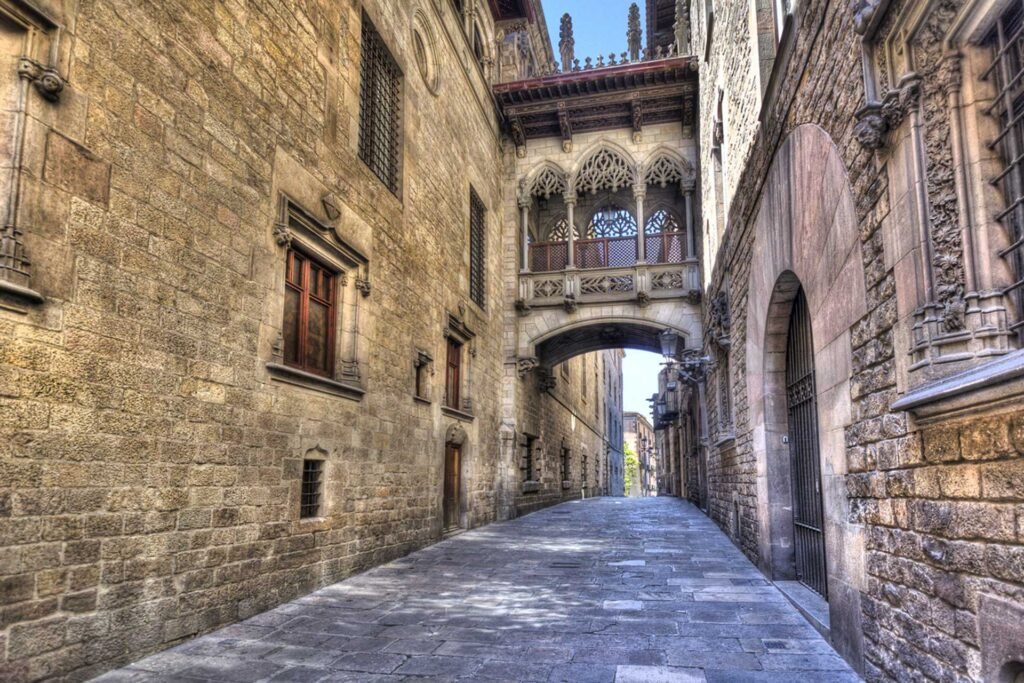
Barcelona can feel like several cities having a very stylish argument at once. There is the postcard city of Gaudí tiles and beach selfies, the student city of cheap menus and shared flats, the all-night city where dinner at 10pm is perfectly normal, and the city where getting briefly lost often delivers your best memory of the week.
For an international student, the trick is not trying to conquer all of it before Friday. Your first week is about building a small orbit: a couple of familiar streets, people whose names you can remember without consulting Instagram, and at least one place where the bar staff no longer look at you as if you are about to ask whether sangria is a breakfast drink.
Start with people, not a perfect itinerary
The fastest route into Barcelona is usually through the unglamorous first-day stuff: orientation sessions, language exchanges, flatmate dinners, campus groups and that person in your class who is also pretending to understand the timetable. Say yes to low-pressure plans, especially early on. A coffee after class can become a group chat; a group chat can become your regular Sunday vermouth crew.
Do not limit yourself to people from your home country. Familiar accents are comforting when everything from the washing machine to the metro ticket machine appears to have personal beef with you, but an international mix makes the experience richer. You will pick up local habits faster, hear about events you would never find alone, and discover that every nationality has a wildly different definition of “meeting at eight.”
A useful first-week rule: be the person who proposes a simple plan. “Want to get tapas after class?” is much easier to accept than “Let’s make the most of Barcelona!” The latter sounds like someone is about to produce a spreadsheet.
- Join university welcome activities, even if they sound mildly awkward.
- Try one language exchange or intercultural event.
- Invite classmates for a menu del día lunch or a walk through a nearby neighbourhood.
- Keep plans small at first: four people are easier to organise than fourteen.
Choose a neighbourhood that matches your social battery
Barcelona is walkable in spirit, although its hills occasionally dispute this claim. Where you spend time matters because each area has a distinct rhythm.
Gràcia is often a natural fit for students who like independent cafés, small squares and evenings that begin with a beer on a terrace before drifting elsewhere. It feels neighbourly and lively without requiring nightclub-level energy every night.
Eixample is central, practical and packed with restaurants, bars and transport connections. It is a good base for the student who wants to reach everything without turning every journey into an expedition. The grid also makes navigation mercifully difficult to mess up.
Poble-sec brings a more relaxed, food-and-drinks-friendly atmosphere and easy access to Montjuïc. El Raval and the Gothic Quarter are intensely central and full of character, but demand a little more urban awareness, particularly late at night. Poblenou appeals to beach-minded students and those who prefer a calmer residential feel with room to breathe.
Visit before you declare a favourite. A neighbourhood can look like your entire personality on TikTok and feel completely wrong at midnight on a Tuesday.
Learn the local clock before attempting nightlife
Barcelona does not treat the evening as a short prelude to bedtime. People often eat late, meet late and go out later. Trying to start a full club night at 9pm may leave you and your friends sitting in a nearly empty venue, questioning your life choices over an expensive drink.
Build up gradually. Start with a shared dinner, tapas or a casual bar. Spanish food culture is excellent social glue because plates are meant to be discussed, passed around and occasionally defended. Trying familiar-looking dishes can be part of the fun: a menu might offer tortilla, Iberian pork cuts, paella or cod with honey, and the translation may sound more mysterious than the food itself. Ask what something is, share a few dishes and accept that the best order is sometimes made by the most decisive person at the table.
Nightclubs tend to come later, while beach clubs, rooftop venues and big event nights can be better saved for when you have found your crowd and understand your budget. Barcelona has no shortage of options; the scarce resource is tomorrow morning’s energy.
Also, do not confuse “late” with “mandatory.” Some of the best nights are a plaza conversation, a gelato stop, live music in a bar, or a long walk home after dinner. The city rewards both the extrovert and the person who leaves before the group photo becomes incomprehensible.
Be street-smart without becoming paranoid
Barcelona is a major, busy tourist city, which means basic caution is not dramatic; it is just sensible. Pickpocketing is a common concern in crowded areas, on public transport and around nightlife zones. Keep your phone and wallet in secure, zipped pockets or a bag worn across your front. Do not leave your belongings on a table edge, a chair back or the tiny patch of beach you have optimistically claimed.
On a night out, agree on a few boring-but-brilliant habits with friends:
- Know how you are getting home before your phone battery reaches its tragic final act.
- Stay aware of your drink and do not accept open drinks from strangers.
- Use licensed transport options and check the route before leaving a venue.
- Share your live location with a trusted friend when heading home alone.
- Carry only what you need; your passport does not need to attend every party.
Respect also goes a long way. Barcelona is not a theme park with a beach attached. Keep noise down when arriving home, follow venue rules, and remember that residents have to wake up early even if your night has only just found its plot.
Mix the icons with the life happening between them
See the landmarks, obviously. The Sagrada Família, Park Güell and the waterfront are famous for good reasons. But avoid treating them like tasks to eliminate from a list. Pair one big sight with something slower: coffee in a neighbourhood you have not explored, a park walk, a small gallery, a football match on a bar television, or a long lunch that accidentally becomes the day’s main event.
The real first-week victory is feeling less like a visitor and more like someone beginning to live here. Learn a few practical phrases—hola, gracias, por favor, ¿qué tal?—and use them cheerfully. You do not need flawless Spanish or Catalan to show good faith. In fact, confusing a phrase about being hungry with a compliment is practically a rite of passage. Better to laugh, ask again, and order the thing that looked good anyway.
Give the city time. Barcelona will still be there next weekend, still beautiful, still noisy, still ready to serve dinner at an hour your old routine considered suspicious. Your job in week one is simply to arrive, stay curious and make enough small plans that one of them turns into a story worth keeping.