
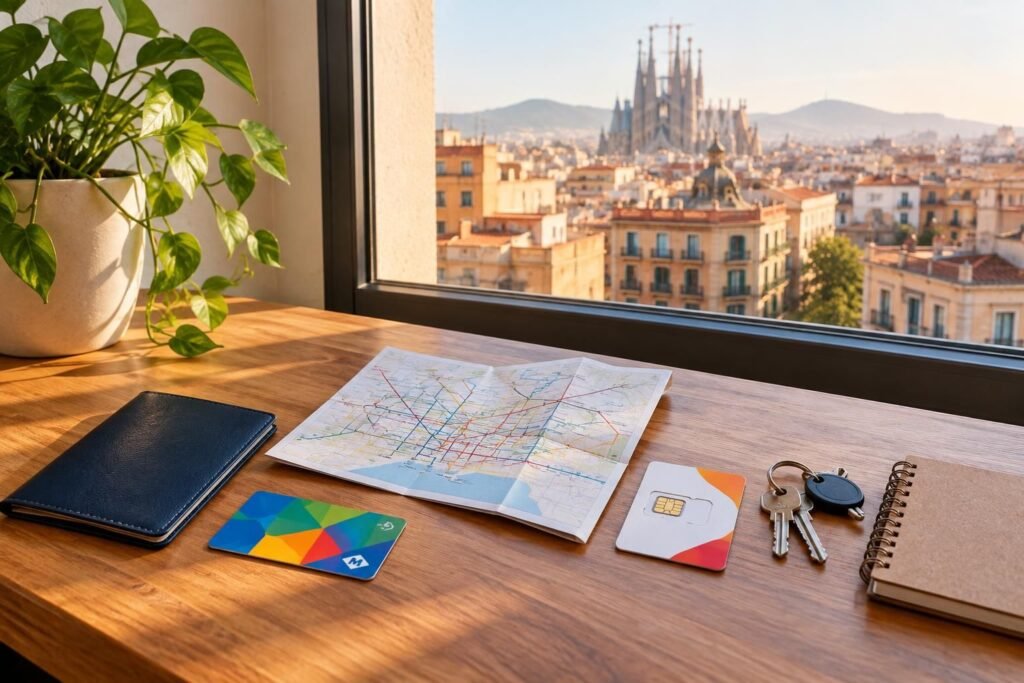
Your first week in Barcelona is not the moment to “just see how it goes”. Between jet lag, university emails, a new flat and the temptation of a beach-side vermouth, a few practical tasks can quickly become a bureaucratic scavenger hunt. The good news: you do not need to solve your entire life in seven days. You do need a sensible order.
For American study-abroad students, Erasmus arrivals and other international students, the first priority is simple: get connected, protect your documents, confirm what your university needs and make daily life workable. Barcelona is easy to enjoy once the basics are in place; before that, even finding the right metro exit can feel like a final exam.
Day one: phone data, documents and a place to sleep
A Spanish SIM or eSIM is more than a way to post your first Gaudí photo. It gives you data for maps, transport apps, two-factor authentication and landlord or university calls. Airport options are convenient but can be pricier; comparing plans once you are in the city may make more sense if you have temporary roaming or a travel eSIM.
Make a secure digital folder before you start moving around: passport, visa, admission letter, health insurance, accommodation agreement, arrival confirmation and any university forms. Keep the originals separate from your day bag, and do not hand over a passport as a casual deposit for a flat viewing or rental key.
Housing deserves immediate attention. If you are in temporary accommodation, use the first days to inspect potential rooms in person where possible. Ask what is included in the rent, whether there is a written agreement, how bills are handled and who you will be sharing with. Be cautious with advance payments for homes you have not properly verified. A rushed arrival is exactly what rental scammers count on.

Days two to four: university paperwork and your immigration checklist
Start with your university or programme office. Orientation sessions, enrolment steps, student cards, campus access and class changes may have their own deadlines, even when the immigration process is still underway. Ask one direct question: which documents must I submit, and which appointments should I book now?
Spain’s residence formalities depend on your nationality and the length and conditions of your stay. Non-EU students staying for longer periods may need to apply for a Tarjeta de Identidad de Extranjero (TIE) after arrival, while EU/EEA and Swiss citizens planning to remain in Spain for more than three months may need to register their residence. Some students may also need a local address registration, known as empadronamiento, depending on their circumstances and the procedure involved.
There is no universal paperwork recipe. Appointment availability, required copies and supporting documents can change, so treat the instructions from your university’s international office and the relevant official administration as your starting point. Keep every receipt and appointment confirmation. They are not glamorous souvenirs, but they can be useful evidence while a process is pending.
Move like a local: transport and small daily systems
Barcelona’s public transport can make your geography expand very quickly. Look into the T-mobilitat system and the fare option that fits your age, zone coverage and expected travel pattern. Your university may also point you towards student-specific guidance. Do this before relying on individual tickets for every ride; a few exploratory metro journeys add up faster than expected.
Use the first week to locate the boring-but-essential places near home: a supermarket, pharmacy, cash machine, laundrette if needed, metro stop and a café where you can sit with Wi-Fi while you sort your life out. This is how a neighbourhood stops feeling like a film set and starts feeling like home.
Money: get organised before you start splitting bills
You may need a Spanish bank account for certain payments, reimbursements or rent arrangements, but the best option depends on your residency status, documents and banking needs. Digital financial services can also be useful for day-to-day transfers and shared expenses, provided they work for your situation. Read the fees, card conditions and cash-withdrawal rules rather than choosing an account because someone in a group chat said it was “easy”.
For the first week, keep a simple spending note: accommodation, transport, groceries, deposits, phone data and social plans. It is not about refusing every invitation. It is about noticing that the “quick” taxi, coffee, late-night snack and entry fee are a very efficient team when they want to empty a student budget.
Meet people without making your first weekend expensive or risky
Barcelona makes socialising remarkably easy, especially at the start of term. University welcome events, student societies, language exchanges and flatmate introductions are better foundations than a random mass-message invite. Choose public venues for first meetings, tell a friend where you are going and make your own route home part of the plan.
A good first weekend does not require VIP tables or a marathon of clubs. Start with an early dinner or a casual terrace drink, then decide whether the group energy is worth taking further. If you do go out, keep an eye on your belongings in busy areas, stay aware of your drink, use licensed transport options and do not feel pressured to match anyone else’s pace.
The first week is also when tiny habits pay off: carry a charged phone, learn your address, save emergency contacts, and know which documents should stay at home. That leaves more headspace for the fun part—finding your people, your favourite late-afternoon walk and the corner bakery that will quietly become essential.
Barcelona will still be there after your admin appointments. Sort the foundations first, then enjoy the city with fewer surprises and a much better chance of remembering the weekend for the right reasons.